
Air Union Farman F.60 Goliath Accident, 14 May 1923
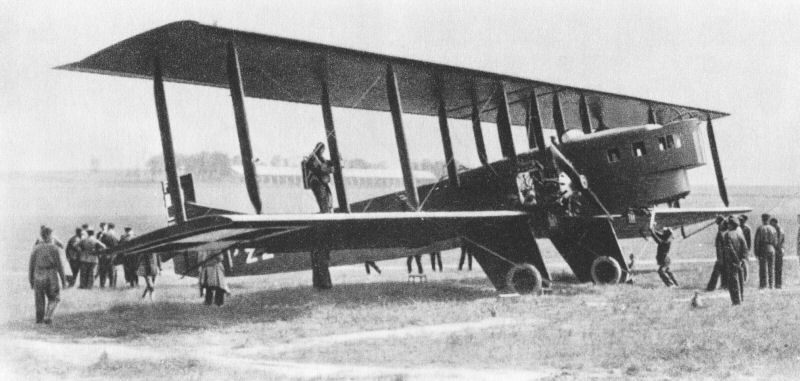
Fact box
| Date | 14 May 1923 |
|---|---|
| Aircraft | Farman F.60 Goliath, registration F-AEGB |
| Operator | Air Union |
| Route | Le Bourget, Paris, to Croydon, near London |
| People on board | 6 (3 crew, 3 passengers) |
| Fatalities | 6 |
| Cause | Not definitively determined; poor visibility and bad weather were considered the main contributing factors |
Summary
On 14 May 1923 an Air Union Farman F.60 Goliath flying from Paris to London met heavy fog and rain and crashed near Monsures at about 13:00. The aircraft hit trees and was destroyed. All six people on board died. The investigators could not establish an exact cause, but they considered the weather the main factor.
Background
Air Union was one of the first French airlines, formed in 1923 from the merger of several smaller companies. Its network linked Paris with London, Brussels and other European cities, an ambitious undertaking so soon after the First World War.
The Farman F.60 Goliath had been designed as a heavy bomber and was adapted for passenger flying after the war. It was a large biplane, meaning it had two sets of wings one above the other, and it carried its passengers in an enclosed cabin. For its time it was a modern airliner.
The flight
On the morning of 14 May 1923 the Goliath, registered F-AEGB, took off from Le Bourget for Croydon Airport, then the main London terminal for international flights. Three crew and three passengers were on board.
Along the route the aircraft ran into heavy fog and rain. Pilots of the period had no radio navigation and few instruments, and they relied largely on sight of the ground. Low visibility was therefore a serious hazard.
At about 13:00 the Goliath crashed at Monsures. Reports indicate that it struck trees and was destroyed on impact.
The investigation
Local authorities, rescuers and aviation officials attended the site, and an investigation followed. Forensic methods were limited in 1923, and the exact cause was never definitively determined.
Poor visibility and adverse weather were considered the primary contributing factors. The accident added to the case for better weather forecasting, improved navigation aids and stronger aircraft design standards.
Legacy
The accident was one of several fatal airline accidents in 1923. It showed how dangerous flying in poor weather could be, and it added to calls for stronger safety practices in commercial aviation.
Over the following years, lessons from accidents of this kind contributed to progress in radio navigation, weather reporting and the reliability of aircraft. Modern air travel rests on that accumulated experience.