
Caproni Ca.48 Airliner Accident, Verona, Italy, 1919
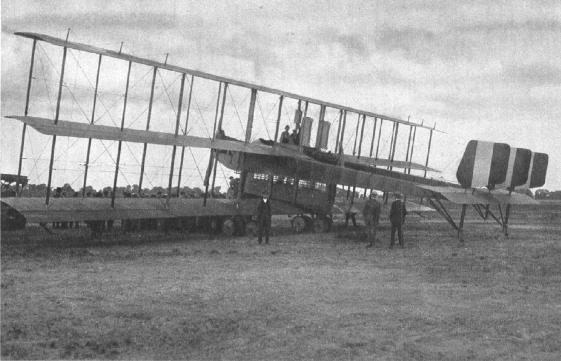
Fact box
| Date | 2 August 1919 |
| Aircraft | Caproni Ca.48 (triplane airliner) |
| Operator | Caproni company, flown by two Italian military pilots |
| Route | Taliedo, Milan, to Venice and return |
| Location | Near Verona, Italy |
| People on board | 14, 15 or 17, depending on the source |
| Survivors | None |
Summary
On 2 August 1919, a Caproni Ca.48 airliner crashed at Verona, Italy, while returning from Venice to Milan. Everyone on board died. It was Italy's first commercial aviation accident with fatalities and one of the earliest accidents involving a heavier-than-air airliner, meaning an aircraft that stays aloft by aerodynamic lift rather than by buoyancy, as a balloon does.
Background
The aircraft
The Ca.48 was a large triplane, an aircraft with three wings stacked one above another. It was an airliner conversion of the Caproni Ca.42, a variant of the Caproni Ca.4 heavy bomber. Bombers of this family served with Italian Army aviation in World War I, striking targets in Austria-Hungary, and also with the British Royal Naval Air Service.
To create the airliner, Caproni removed all armament and fitted a double-deck cabin with large windows and seating for 23 passengers. The Ca.48 drew considerable excitement when it was first shown to the public, but it probably never entered airline service.
The flight
The aircraft was owned and operated by Caproni and flown by two Italian military pilots. On Saturday 2 August 1919 it left the company's home airfield at Taliedo, a district of Milan, at 07:30 local time and flew to Venice, where it landed without incident at 09:22.
After spending the day in Venice, the aircraft took off at 17:00 for the return to Taliedo. Eyewitnesses reported that as it passed near the airfield at Verona, at about 3,000 ft, its wings seemed first to flutter and then to collapse. The aircraft crashed, and no one on board survived.
People on board
Sources agree that all on board died, but they differ on how many people there were. A report published five days after the accident gives 14: the two pilots, five prominent Italian journalists and seven Caproni mechanics. Later sources give a death toll of 15 or 17 without explaining the difference.
The investigation
Eyewitness accounts are the main evidence of what happened. They describe the wings fluttering and then failing, which points to a structural failure in flight. The differing casualty figures show how limited the record of this early accident is.
Legacy
The accident marked the first fatal commercial aviation accident in Italy, at a time when passenger flying was only just emerging from wartime aircraft design. It stands among the earliest airliner accidents in history, and a reminder of how closely the first airliners were tied to the bombers from which they were adapted.