
Picardie Mid-Air Collision, France, 1922
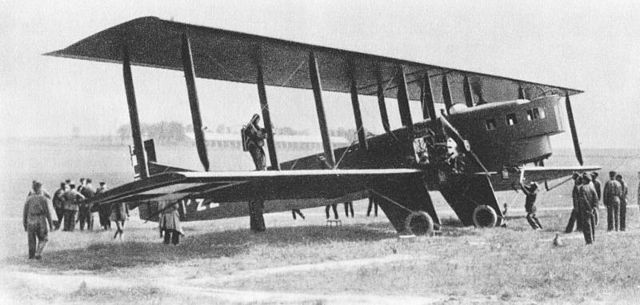
| Date | 7 April 1922 |
|---|---|
| Location | Thieuloy-Saint-Antoine, near Grandvilliers, Oise department, Picardie, France |
| Aircraft | de Havilland DH.18A, registration G-EAWO (Daimler Hire); Farman F.60 Goliath, registration F-GEAD (Compagnie des Grands Express Aériens) |
| Routes | Croydon to Le Bourget, Paris (DH.18A); Le Bourget to Croydon (Goliath) |
| People on board | 7 (DH.18A: pilot and boy steward; Goliath: pilot, mechanic and three passengers) |
| Fatalities | 7 |
Summary
On 7 April 1922 a British and a French passenger-carrying biplane (an aircraft with two sets of wings, one above the other) collided in fog over Picardie, France. The British de Havilland DH.18A was flying from Croydon to Paris with only mail on board. The French Farman Goliath was flying from Paris to Croydon with three passengers. All seven people on the two aircraft died. It was the first mid-air collision between airliners.
Background
After World War I, demand for military aircraft and their pilots fell steeply. Britain and France, like other countries, turned to building a civil air industry, at first by converting military designs for civilian use.
The de Havilland DH.18A was the first Airco-designed aircraft built for airline work after World War I. One example, owned by the Air Ministry and registered G-EAWO, was transferred from Instone Air Line to Daimler Hire Limited. Daimler was to operate it on the Croydon–Paris route until the three de Havilland DH.34s it had ordered could be delivered. The service began on 2 April 1922.
On the French side, Compagnie des Grands Express Aériens (CGEA) was running a daily service from Le Bourget to Croydon with a Farman F.60 Goliath, registered F-GEAD.
The flight
On 7 April 1922, four days after Daimler Hire began operating the DH.18A, G-EAWO left Croydon for Le Bourget carrying mail. On board were only the pilot, Lieutenant R. E. Duke, and a boy steward named Hesterman.
At the same time the Goliath, flown by M. Mire, had left Le Bourget with a mechanic and three passengers: an American couple on their honeymoon and a French national.
Both aircraft were following the normal route in drizzle and fog at about 492 ft (150 m). Visibility was poor. The two aircraft met suddenly in the mist, and neither crew had time to avoid the other.
The collision happened over Thieuloy-Saint-Antoine, about 2 nautical miles (4 km) south of Grandvilliers in the Oise department, now part of Picardie. The site is about 15 nautical miles (27 km) north of Beauvais and about 60 nautical miles (110 km) north of Paris.
The DH.18A lost a wing and its tail and struck the ground first. The Goliath came down a few minutes later. People from the area reached the scene quickly, but nobody on either aircraft survived.
Aftermath and legacy
After the accident, a meeting was held at Croydon Airport. It was attended by representatives of Compagnie des Grands Express Aériens, Compagnie des Messageries Aériennes, Daimler Airway, Handley Page Transport, Instone Air Line and KLM, together with two representatives of the Air Ministry and several pilots employed by the companies.
The meeting passed a number of resolutions:
- "Keep to the right" was to become the universal rule of the air.
- New airliners should give the pilot a clear view ahead.
- All airliners should be equipped with radio.
- Clearly defined air routes were to be introduced in Belgium, France, the Netherlands and the United Kingdom.
Together, these measures addressed the two problems the collision exposed: pilots could not see each other in poor weather, and aircraft on the same route had no agreed way to pass one another.