
First Airliner Collision: Thieuloy-Saint-Antoine, 7 April 1922
On 7 April 1922 two commercial aircraft flying in opposite directions on the Paris–London route met in fog over northern France. All seven people on board both aircraft died. It is generally recorded as the first mid-air collision between airliners, and it prompted the operators on the route to agree rules that now seem obvious.
Key facts
| Date | 7 April 1922 |
| Location | Thieuloy-Saint-Antoine, Oise, Picardie, France |
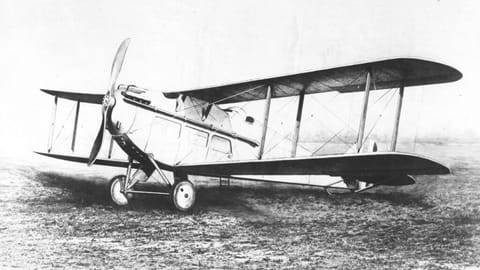
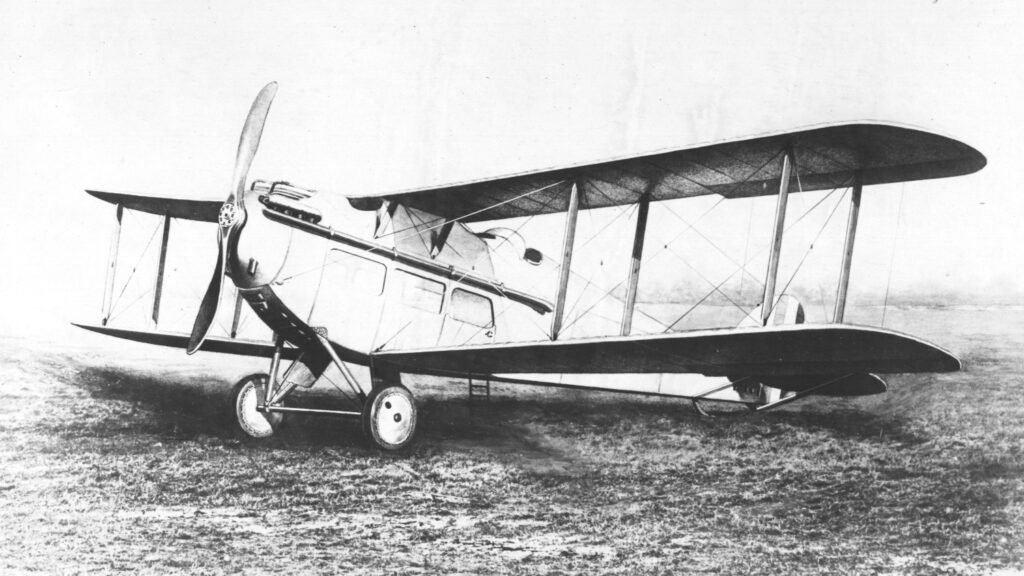
| Aircraft 1 | de Havilland DH.18A, G-EAWO, Daimler Hire Limited; Croydon to Le Bourget; pilot and a boy steward, carrying mail |
| Aircraft 2 | Farman F.60 Goliath, F-GEAD, Compagnie des Grands Express Aériens (CGEA); Le Bourget to Croydon; two crew and three passengers |
| Fatalities | 7 (no survivors) |
| Conditions | Drizzle, mist and fog; altitude about 500 ft |
Background
Scheduled air travel between London and Paris was only a few years old in 1922. Several companies competed on the route, using converted wartime types and the first aircraft designed for civil work.
The de Havilland DH.18A was among the earliest of those purpose-built airliners. G-EAWO belonged to the Air Ministry and had been working for Instone Air Line. It was transferred to Daimler Hire Limited, which wanted it to operate the Croydon–Paris service until three DH.34 aircraft it had ordered could be delivered. Daimler began flying the route only four days before the collision.
The Farman F.60 Goliath was a large French biplane. CGEA used one, F-GEAD, on a daily service from Le Bourget, Paris, to Croydon, south of London.
The flight
On the morning of 7 April the DH.18A left Croydon for Le Bourget with mail and two people aboard: the pilot, Lieutenant R. E. Duke, and a boy steward. At about the same time the Goliath, flown by M. Mire, left Le Bourget with a mechanic and three passengers. The passengers were a married couple travelling to Britain and a French businessman.
Aircraft of the period had no radio and no instruments for flying in cloud, so pilots navigated by sight. That meant following roads, railways and rivers, and flying low enough to see them. Both aircraft were doing this in drizzle and fog at about 500 ft, near the road at Thieuloy-Saint-Antoine. This lies about 2 nautical miles south of Grandvilliers and some 15 nautical miles north of Beauvais, roughly 60 nautical miles north of Paris.
The two aircraft followed the same line in opposite directions. In the poor visibility they came into sight of each other too late for either pilot to avoid the other. The DH.18A lost a wing and its tail in the impact and fell first. The Goliath came down a few minutes later. Local people reached the scene quickly, and all seven people on board the two aircraft died.
What was concluded
The surviving record is mainly the press and trade reporting of the time, together with the decisions taken afterwards by the companies involved. It does not point to a mechanical fault in either aircraft. It describes two crews doing what was normal practice, following a familiar landmark in weather that left almost no margin.
That is what made the event significant. Nothing in the system of the day separated one aircraft from another. Pilots had no agreed side of the road to keep to, no common routes and no means of speaking to the ground. A collision between two aircraft on a busy route had been a possibility since the service began.
Legacy
Within days of the accident a meeting was held at Croydon. It brought together representatives of CGEA, Compagnie des Messageries Aériennes, Daimler Airway, Handley Page Transport, Instone Air Line and KLM. Two Air Ministry representatives and a number of airline pilots also attended. The resolutions included:
- Adopting "keep to the right" as the universal rule of the air, so that opposing aircraft would pass on a predictable side
- Designing new airliners so that the pilot has a clear view ahead
- Fitting all airliners with radio, so that crews could be in contact with ground stations
- Introducing clearly defined air routes in Belgium, France, the Netherlands and the United Kingdom
These were recommendations agreed by the industry rather than law, and they took time to put into practice. Even so, they set out ideas that remain central to air traffic management: shared rules for meeting traffic, defined corridors, and communication between aircraft and the ground. Some accounts treat the Croydon meeting as an early step towards organised air traffic control.
Why it is remembered
The Thieuloy-Saint-Antoine collision involved small aircraft carrying few people, and it is little known outside aviation history. It showed that growing traffic on a single route needed rules, not just careful pilots. Today separation between aircraft is handled by controllers and on-board collision-avoidance systems. The 1922 accident marks the point where the industry first began to build such a system.