
Italy's First Airliner Loss: The Verona Crash of August 1919
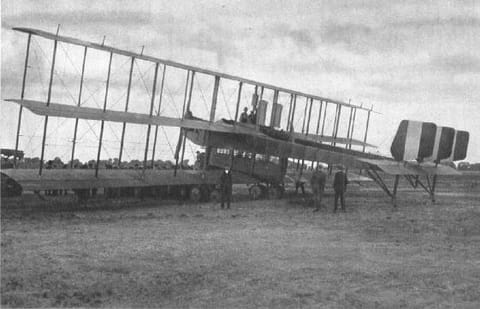
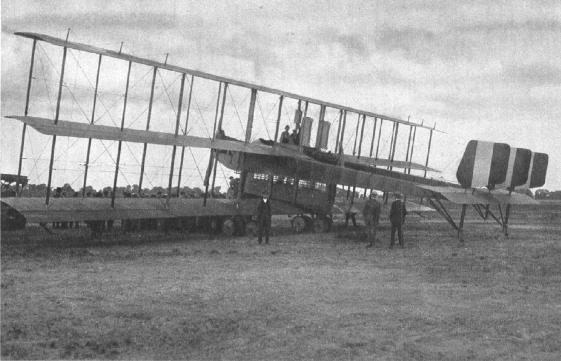
On 2 August 1919 a Caproni Ca.48, a large converted bomber fitted out to carry passengers, came down near Verona in northern Italy. It was returning from Venice to Milan, and no one on board survived. The accident is generally regarded as Italy's first fatal commercial aviation accident. It is also the earliest known fatal accident involving a passenger aircraft heavier than air. Records of it are thin, and even the number of people killed differs from one source to another.
At a glance
| Date | 2 August 1919 |
| Aircraft | Caproni Ca.48 triplane airliner |
| Operator | Caproni company |
| Route | Venice to Taliedo, Milan (return leg) |
| Location | Verona, Italy |
| Crew | 2 military pilots |
| Fatalities | All on board; 14, 15, 16 or 17 depending on the source |
| Survivors | 0 |
| Probable cause | Possible structural failure |
Background: a bomber turned airliner
The Ca.48 was a triplane, meaning it carried three sets of wings stacked one above another. It was developed from the Caproni Ca.42, a version of the Ca.4 heavy bomber. Aircraft of this family had flown with the Italian Royal Army's flying units in World War I, attacking targets in Austria-Hungary. The British Royal Naval Air Service had also used them.
To make the airliner, Caproni removed the weapons and fitted a double-deck cabin with large windows. The cabin had seats for 23 passengers. The aircraft drew a good deal of public excitement when it was introduced. According to the sources consulted, though, it probably never entered regular airline service, so the flight of 2 August was a company operation rather than a scheduled service.
The flight
The aircraft belonged to Caproni and was flown by two Italian military pilots. It left the company's home airfield at Taliedo, a district of Milan, at 07:30 local time on Saturday 2 August 1919. It reached Venice without incident at 09:22.
The party spent the day in Venice. The return flight to Taliedo began at 17:00. The route took the aircraft towards Verona, and eyewitnesses described what happened as it passed near the city's airfield at about 3,000 ft. They said the wings appeared to flutter and then to give way completely. Flutter is a rapid vibration of a wing or control surface that can grow quickly and, in severe cases, tear the structure apart.
The wreckage was found spread over an area with a radius of more than 400 metres. A spread of that size is consistent with an aircraft that broke up in the air rather than one that struck the ground in one piece.
Who was on board
All sources agree that everyone on the aircraft died. They disagree on how many people that was. A report published five days after the accident, in the British journal Flight, gave a total of 14. These were the two pilots, five prominent Italian journalists and seven Caproni mechanics.
Later accounts give higher totals. Some say 15 and others 17, without explaining how they arrived at the figure. A further source names 16 individuals who died. The passenger count is therefore uncertain, with estimates ranging from 12 to 15 passengers alongside the two crew.
The differences are probably the result of the period. Flights of this kind were informal, passenger lists were not kept in the way they are today, and early press reports were compiled quickly. A contemporary account is valuable, but it is not necessarily complete.
What is known about the cause
The accident is catalogued as a possible structural failure, based on the eyewitness accounts of the wings fluttering and collapsing. The sources used here do not describe a formal investigation or a published report with detailed findings. The cause therefore rests on what observers saw rather than on a technical examination that is widely cited.
The aircraft's size and origin make structural questions a reasonable focus. The Ca.48 was a very large machine adapted from a wartime design. The adaptation added a heavy double-deck cabin and large windows, and it was meant to carry far more people than the bomber had. Whether the changes played any part cannot be established from the available material, and this article does not claim that they did.
Legacy and significance
The Verona accident came at the very start of commercial flying, only months after the end of World War I. Many early passenger aircraft were converted military machines. Their structures had been designed for combat duty, not for the routine carriage of civilians, and no formal system of airworthiness certification yet existed.
Its main importance is as a marker. It is the first fatal commercial air accident recorded in Italy, and it is among the earliest involving a purpose-fitted passenger aircraft anywhere. The loss of several journalists and Caproni staff also meant that the event was widely reported at the time, which is why any record of it survives.
Modern practice rests on thorough investigation, published findings and certification standards that test how structures behave under flutter and other loads. Those things were not in place in 1919. The Verona crash is a reminder of how much of that framework has been built since, and of how limited the knowledge available to the first airline passengers was.