
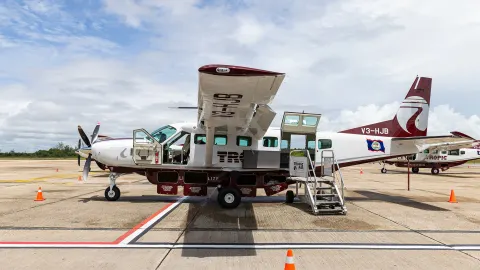
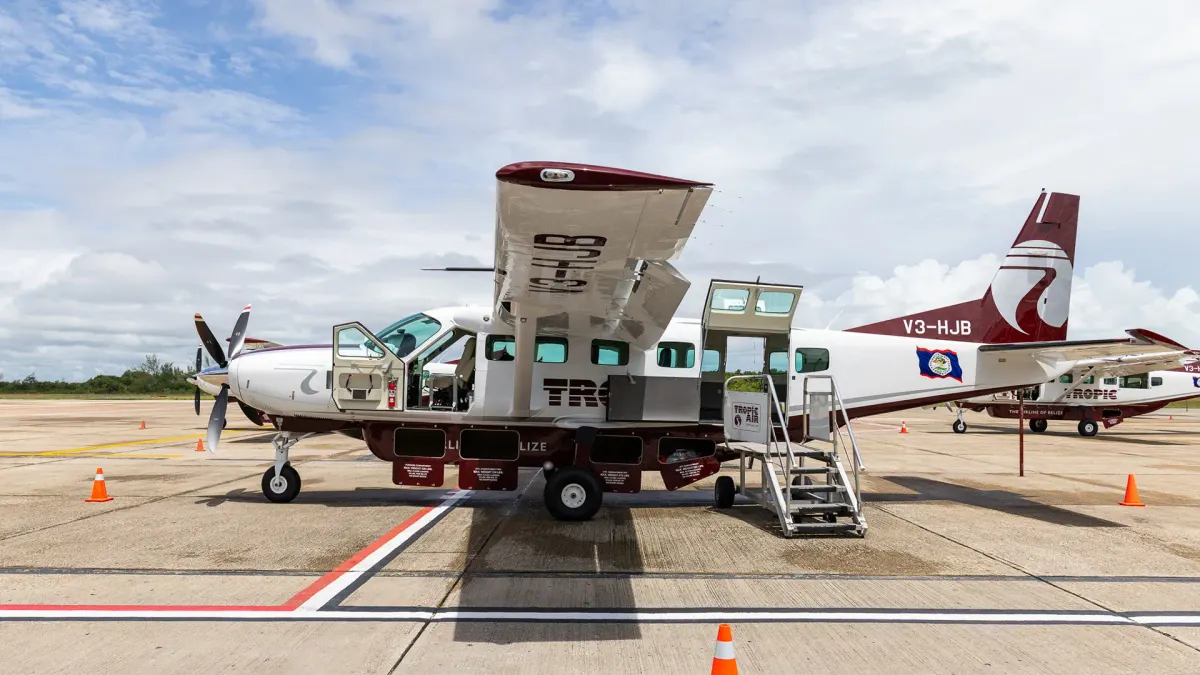
Tropic Air Flight 711: Hijacking over Belize, 2025
On the morning of 17 April 2025, a Tropic Air Cessna 208B Grand Caravan EX left Corozal in northern Belize for a short scheduled flight to San Pedro. A passenger armed with a knife took control of events on board and demanded to be flown out of the country. The aircraft circled for around an hour and a half and landed at Belize City with little fuel left. It was one of the most serious aviation security events in the country's recent history.
Key facts
| Date | 17 April 2025 |
| Aircraft | Cessna 208B Grand Caravan EX, registration V3-HIG |
| Operator | Tropic Air |
| Flight number | 9N711 (call sign TROPISER 711) |
| Route | Corozal to San Pedro (John Greif II Airport), Belize |
| Landing | Philip S. W. Goldson International Airport, Belize City |
| People on board | 16, including the hijacker |
| Fatalities | 1 (the hijacker) |
| Injured | 3, all of whom recovered |
| Investigation | Belize Department of Civil Aviation, with police and the US Embassy |
Background
Tropic Air is a Belizean airline that flies scheduled services within Belize and to neighbouring countries. Its Caravans are single-engine turboprops, widely used for short hops between towns, islands and airstrips. The Corozal to San Pedro route is a routine domestic service.
Official accounts differ slightly on who was on board. The government described 15 passengers and one pilot, while other reports spoke of 14 passengers and two crew. All agree that 16 people were aboard. Small domestic airports in Belize did not, at the time, carry out the security screening usual at larger international airports. The police commissioner later pointed to this as the probable reason a knife reached the cabin.
The flight
Departure and the first signs of trouble
The aircraft took off from Corozal at about 08:15 local time (14:15 UTC). Around six minutes later it began transmitting the transponder code 7700. A transponder is the device that identifies an aircraft on air traffic control radar, and 7700 is the international code for a general emergency.
The aircraft turned sharply and began circling over the Belizean coast. At one point it asked other aircraft in the area, including a tour helicopter, to keep track of it.
The demand
The hijacker, a 49-year-old United States citizen, told the crew to fly him out of the country. Reports say he named Texas as the destination. That was far beyond the range of the fuel on board. His motive has not been established. Police said he had entered Belize only days earlier and had reportedly been in trouble with police there. The commissioner also said he had previously been refused entry to the country.
Landing at Belize City
The Caravan stayed airborne for roughly an hour and a half. The government put the time aloft at about 1 hour 40 minutes. With fuel running very low, the pilot brought the aircraft down at Goldson International Airport at around 10:30. The pilot's handling of the landing was praised by both the airline and the government.
Three people were hurt during the final stage of the flight and on landing, including the captain. A passenger who held a licence to carry a firearm shot the hijacker, who died. The injured were taken to hospital and recovered. The government said that passengers' actions helped bring the situation to an end.
The investigation
The Government of Belize announced a formal investigation the same day. The Department of Civil Aviation led it and worked with the police and the United States Embassy. Officials said they had found no link to any wider threat. They promised that a full report would be published.
The central question is how a passenger boarded a scheduled flight with a knife. The police commissioner said it was not yet known how the weapon came aboard. He said the lack of screening at smaller airports was the likely explanation. The government acknowledged that this was a serious breach. It also noted that more than 120,000 domestic flights operate safely in Belize each year.
Legacy: what changed
Tropic Air said soon after the event that it had faced a serious and unprecedented in-flight emergency. Its chief executive described the pilot's actions as heroic and promised support for those who were hurt. On 30 April the airline announced stricter security, including searches of personal items and physical searches of passengers.
The government committed to review and strengthen security at the country's airports and to align its practices with international standards. The captain later brought a legal claim against the Belize Airports Authority. He argued that inadequate airport security had allowed the hijacking to happen.
The event shows that unlawful interference is not confined to large airports or long-haul routes. A small aircraft with a single flight deck door, or none at all, has few physical barriers between passengers and crew. Screening before boarding is therefore the main defence on such flights.
Summary
Flight 711 ended with the aircraft on the ground at Belize City and the surviving occupants safe. A man had tried to commandeer a short domestic flight with a knife, and the crew managed to land the aircraft despite dwindling fuel. The main lessons concern screening at small airports. The findings of the official inquiry should show how far those lessons are applied across the country's network.