
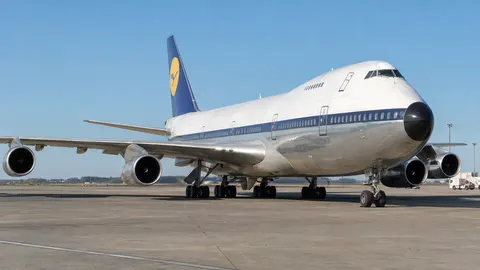
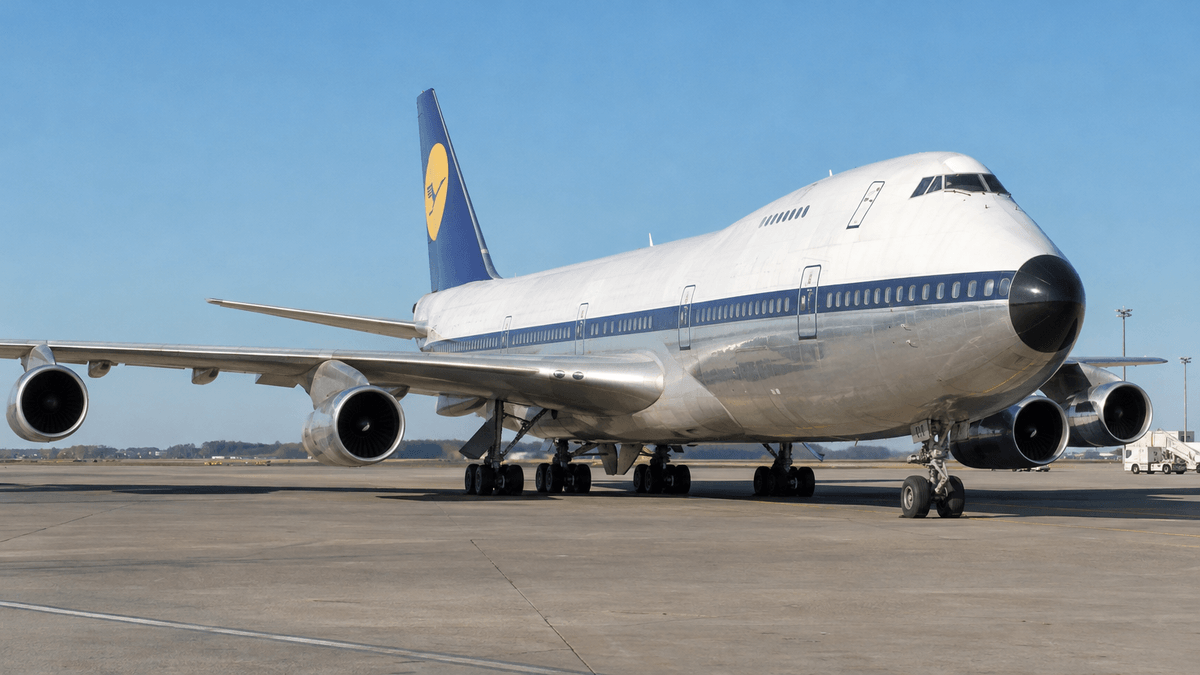
Lufthansa Flight 649: Hijacking to Aden, South Yemen, 1972
In the early hours of 22 February 1972, five armed men took over a Lufthansa Boeing 747 about half an hour after it left Delhi. The aircraft ended its journey in Aden, in what was then South Yemen. Nobody on board died, and the hostages were freed within about a day. The price was a ransom of US$5 million, paid by the West German government.
Key facts
| Date | 22–23 February 1972 |
|---|---|
| Aircraft | Boeing 747-230B, registration D-ABYD, named Baden-Württemberg |
| Route | Tokyo (Haneda) to Frankfurt, via Hong Kong, Bangkok, Delhi and Athens |
| Diversion | Aden International Airport, South Yemen |
| People on board | About 180 to 190, including 5 hijackers (published figures differ slightly) |
| Fatalities | 0 |
| Outcome | All hostages released after a ransom of US$5 million |
Background
Flight 649 was a weekly Lufthansa service. It left Tokyo on Monday afternoons and reached Frankfurt the following morning, calling at Hong Kong, Bangkok, Delhi and Athens on the way. The aircraft was a 747-200 passenger model, one of the first jumbo jets in the airline's fleet.
The hijackers are reported to have joined the flight at different stops: one at Hong Kong, two at Bangkok and two at Delhi. They carried guns and explosives. In 1972 airport security screening was far lighter than it later became, and Lufthansa had never before had an aircraft hijacked.
The hijacking
The takeover began shortly after the 747 left Delhi for Athens. The hijackers first told the pilot to land on an unprepared strip in the Arabian Desert. The crew explained that this would be too dangerous for an aircraft of that size, and the hijackers accepted Aden instead.
After landing, the hijackers released the women and children among the passengers, together with one female flight attendant. The male passengers and the remaining crew stayed on board.
Who the hijackers claimed to be
They described themselves as members of a previously unknown group, called in reports the Organisation for Resisting Zionist Persecution. Later accounts linked them to the Popular Front for the Liberation of Palestine (PFLP). The group's true identity was never firmly established.
The ransom
A few hours into the hijacking, a note reached Lufthansa's headquarters in Cologne. It said the aircraft would be destroyed by 09:00 the next day unless US$5 million was paid. The note gave detailed instructions for handing the money over near Beirut.
Lufthansa was then state-owned, and the West German government decided to meet the demand in full without negotiating. Once the hijackers had been told the money was paid, the male passengers were allowed to leave on 23 February. A Lufthansa Boeing 707 had flown to Aden to collect them, though it was kept on the ground for a further three hours. The 14 remaining crew members stayed in the 747 until the evening, when they too were released.
Authorities had hoped to keep the sum secret so as not to encourage imitators. The Federal Transport Minister, Georg Leber, disclosed it on 25 February. A spokesman for the International Air Transport Association said it was the largest ransom yet paid for an aircraft.
Aftermath
When the hostages were free, the hijackers gave themselves up to the South Yemeni authorities. On 27 February they were released without charge, reportedly in return for about US$1 million of the ransom. For that reason they were never reliably identified or brought to trial.
The German magazine Der Spiegel later speculated that the rest of the money helped fund the attack at Lod Airport in Israel on 30 May 1972. The report is speculation, not an established finding.
The aircraft returned to service and was later sold to Korean Air Lines, which flew it as HL7440.
Legacy
There was no formal accident investigation, because the event was a crime and not an accident. Its significance lies in what it showed about the threat to civil aviation and about how governments chose to respond.
Flight 649 was the first hijacking in Lufthansa's history. It was also the first of several 1972 incidents involving Palestinian groups and West Germany. These included the hostage-taking at the Munich Olympic Games and the hijacking of Lufthansa Flight 615 in October. In those cases, too, West Germany met the attackers' demands. Israel criticised this approach, and its government said Germany had given in to terrorism.
West German policy changed over time. In 1977, when Lufthansa Flight 181 was hijacked, the government did not pay or negotiate. It sent in GSG 9, its new special police unit, to storm the aircraft. The 1972 payment to the hijackers of Flight 649 is part of the background to that decision.