
Nicosia Britannia Accident, Cyprus, 20 April 1967
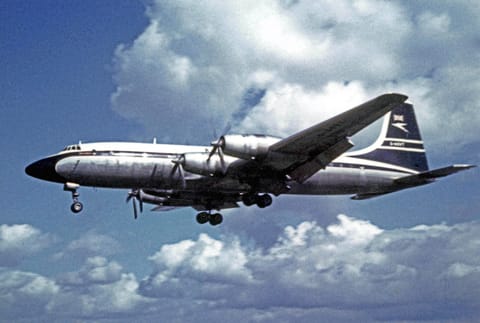
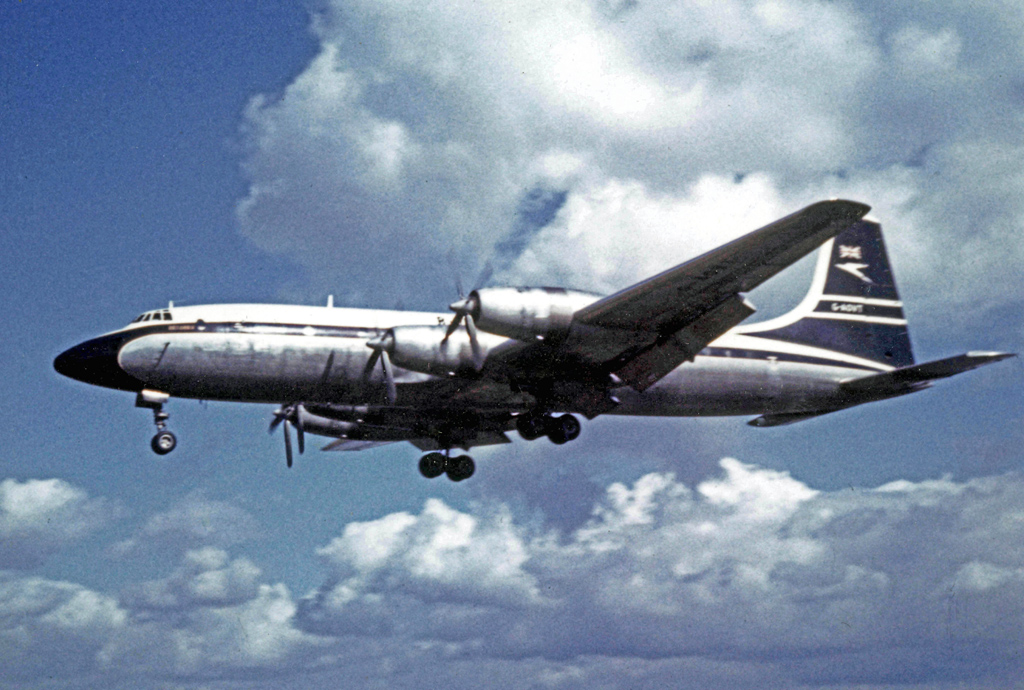
On 20 April 1967 a Bristol Britannia operated by the Swiss charter airline Globe Air flew into rising ground near the village of Lakatamia, south of Nicosia Airport in Cyprus. The aircraft was carrying holidaymakers home from Thailand to Switzerland. Of the 130 people on board, 126 died. It remains the deadliest aviation accident to have occurred in Cyprus, and it is also described as the worst accident involving a Britannia.
Key facts
- Date: 20 April 1967
- Aircraft: Bristol Britannia 313, registration HB-ITB
- Operator: Globe Air (Switzerland)
- Route: Bangkok to Basel, with stops planned at Colombo, Bombay and Cairo
- People on board: 130 (120 passengers, 10 crew)
- Fatalities: 126
- Survivors: 4
- Site: about 3.5 km (2.2 miles) south of Nicosia Airport
- Classification: controlled flight into terrain
Background: a long charter route
Globe Air was founded to compete in the Swiss charter market, where Basel had become a major gateway for holiday traffic. For longer routes it acquired a pair of Britannia 313s that had previously flown for El Al. HB-ITB entered service with the airline from Basel in April 1964. The Britannia was a four-engined turboprop airliner (an aircraft whose engines drive propellers through gas turbines), well suited to long sectors.
The flight in question was a tourist charter. It had left Bangkok and called at Colombo, in what was then Ceylon, and then at Bombay. The next planned stop was Cairo, with Basel as the final destination.
The flight
The aircraft left Bombay on 19 April at 13:12 UTC, with fuel for more than eleven hours of flying. The planned flight time to Cairo was about nine hours. Cyprus was on the way, and its local time was two hours ahead of UTC.
Weather at Cairo was poor, and the crew diverted to Nicosia. The flight plan had named Beirut as the alternative, and the weather there was much better than at Nicosia. The investigators could not establish why the captain chose Nicosia instead.
The aircraft was heard calling Nicosia at 22:15 UTC. Because of the distance, two-way radio contact could not be set up until 22:34. Beirut had already told Nicosia that the aircraft had entered the Nicosia flight information region, the block of airspace for which Nicosia provided services. Nicosia passed weather reports to the crew at 22:38 and again at 22:54.
A violent thunderstorm was over the airport. The crew made repeated approaches, and the final one was reported as the third attempt to land on runway 32. At 01:13 local time on 20 April (23:13 UTC on 19 April), the Britannia struck a hill near Lakatamia and caught fire.
Four people survived: two German and two Swiss nationals. They were treated at a United Nations field hospital near Nicosia.
The investigation
The accident was classed as controlled flight into terrain. This is a term for an aircraft that is under the crew's control but is flown into the ground or an obstacle, usually because the crew is unaware of how close it is.
The investigators drew attention to several points:
- The choice of airport. Beirut offered much better weather and was on the flight plan, yet the aircraft continued to Nicosia. The reasons for this decision could not be determined.
- Duty time. Both pilots had passed their authorised duty time by about three hours. The excess was greater still if the hour before scheduled departure, which the company counted as duty for flight-time limits, was included.
- Experience on type. The first officer had flown fewer than 50 hours on the Britannia.
- Weather. The approaches were flown in low visibility and thunderstorm conditions, and the inquiry noted that the crew should have diverted to an airport with better weather.
Fatigue is generally recognised as a factor that narrows attention and weakens judgement, and a flight of this length makes it more likely. It was cited as a contributing element here. The investigators did not recover an explanation for the decision to land at Nicosia, and this article does not speculate about it.
Legacy
The public records reviewed for this article do not link the accident to a specific change in regulations. It stands as a case study in themes that investigators have returned to many times: tiredness at the end of a long multi-sector duty, the importance of choosing a diversion airport with margin in hand, and the added risk of repeated approaches in thunderstorms.
The accident also ended a Swiss airline. Globe Air's operating licence was withdrawn on 17 October 1967, and it filed for bankruptcy two days later. The sale of paintings connected with the airline's collapse led to a public vote in Basel in December 1967, in which citizens approved the purchase of two early works by Pablo Picasso for the city's museum. A crash in the eastern Mediterranean therefore left a lasting mark on the cultural life of a Swiss city.
Remembering the flight
The Nicosia accident belongs to a period when long-range charter flying was opening foreign travel to many more people, often on tight schedules and with modest margins. Its main lessons concern rest, decision-making and the discipline of choosing the safer airport when conditions are uncertain.