
1922 Baoding Plane Crash: China's First Civil Aviation Accident
On 31 March 1922 a Handley Page aircraft belonging to the Baoding Air Force crashed while returning to Baoding Airport, in Zhili province, Republic of China. All 14 people on board died. The flight was the last day of a three-day demonstration tour meant to promote civil aviation, and the accident is recorded as the first of its kind in China.
Key facts
| Date | 31 March 1922 |
|---|---|
| Aircraft | Handley Page passenger aircraft |
| Operator | Baoding Air Force |
| Route | Baoding Airport to Baoding Airport (test flight) |
| People on board | 14 |
| Fatalities | 14 |
| Survivors | 0 |
| Site | Wulipu, north-east of Baoding Airport |
Background
The Baoding Air Force was founded on 1 November 1921 by warlords of the Zhili clique, a powerful military faction of the period. It was built from aircraft salvaged from Beijing. Its pilots trained on the three Handley Page aircraft the force still had. Handley Page was a British manufacturer, and the type was a large multi-crew aircraft that could carry a number of people.
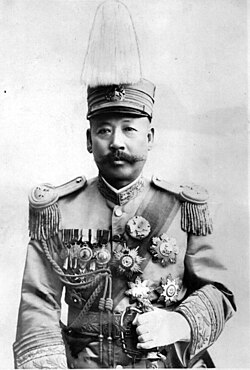
In spring 1922 the Zhili leader Cao Kun set up a preparatory office for a proposed air route between Beijing and Hankou. The stated aim was to develop civil aviation. To raise the project's profile, one of the Handley Page aircraft was assigned to a test flight tour at Baoding from 29 to 31 March. During those days it carried people from local government offices, military units and other organisations. The first two days passed without incident.
Historical records of the Republic of China show no fatal aviation accident at Baoding Airport between the force's founding and 31 March 1922.
The flight
On the morning of 31 March the aircraft took off from Baoding Airport on a further test flight with 14 people aboard. They were a mixed group of pilots, engineers, army officers and other personnel. The pilot-in-command was Ma Yufang, a pilot of the Baoding Air Force who had trained at the Nanyuan Aviation School.
At about 10:20 local time the aircraft was returning to the airport. Accounts say it was flying a low approach, meaning that its final descent towards the landing area was lower than it should have been. Its tail struck the tops of trees at Wulipu, a place north-east of the airport, and the aircraft fell to the ground. A fire followed and the aircraft was destroyed. Firefighters needed more than an hour to put it out.
What the records say about the cause
No formal investigation report from 1922 is available among the material used for this article, and the sources do not describe the weather, the aircraft's mechanical condition or the crew's workload. The conclusions below come from the historical accounts and go no further than they do.
- The aircraft was too low on its approach to the airport.
- Its tail made contact with trees short of the landing area.
- The impact was followed by a fire that destroyed the aircraft.
Aviation was young in China at the time. Organised accident investigation, as it exists today, was not yet established there, and training, aircraft handling and airfield practice varied widely. The accounts do not, however, attribute the accident to any single contributing factor beyond the low approach.
Aftermath and legacy
Accounts record that Cao Kun was deeply troubled by the news. He is reported to have concluded that an air force, as an instrument of war, was an unreliable one. He ordered improvements to safety in flight training and said that people outside the flying programme should no longer be taken on board training flights. Because the loss of life had been so large, the Baoding Air Force was barred from carrying passengers on training flights.
The decision reflects a principle that remains familiar: training flights and demonstration flights serve different purposes, and mixing them raises the number of people exposed to risk. Separating the two was a practical response to a loss that the force could not ignore.
Why it is remembered
The Baoding crash is noted in histories of Chinese aviation because it came at the very start of civil flying in the country. It is described as the first accident involving a Chinese civil aircraft, and it happened while the authorities were trying to show the public that air travel had a future. The 14 people who died included aircrew, engineers and military personnel who had taken part in that effort. The accident stands as an early marker in the history of aviation safety in China.